Comprehensive Care for the Well-Elder: Building a Foundation for Geriatric Nursing Excellence
Published: 14 Dec 2025
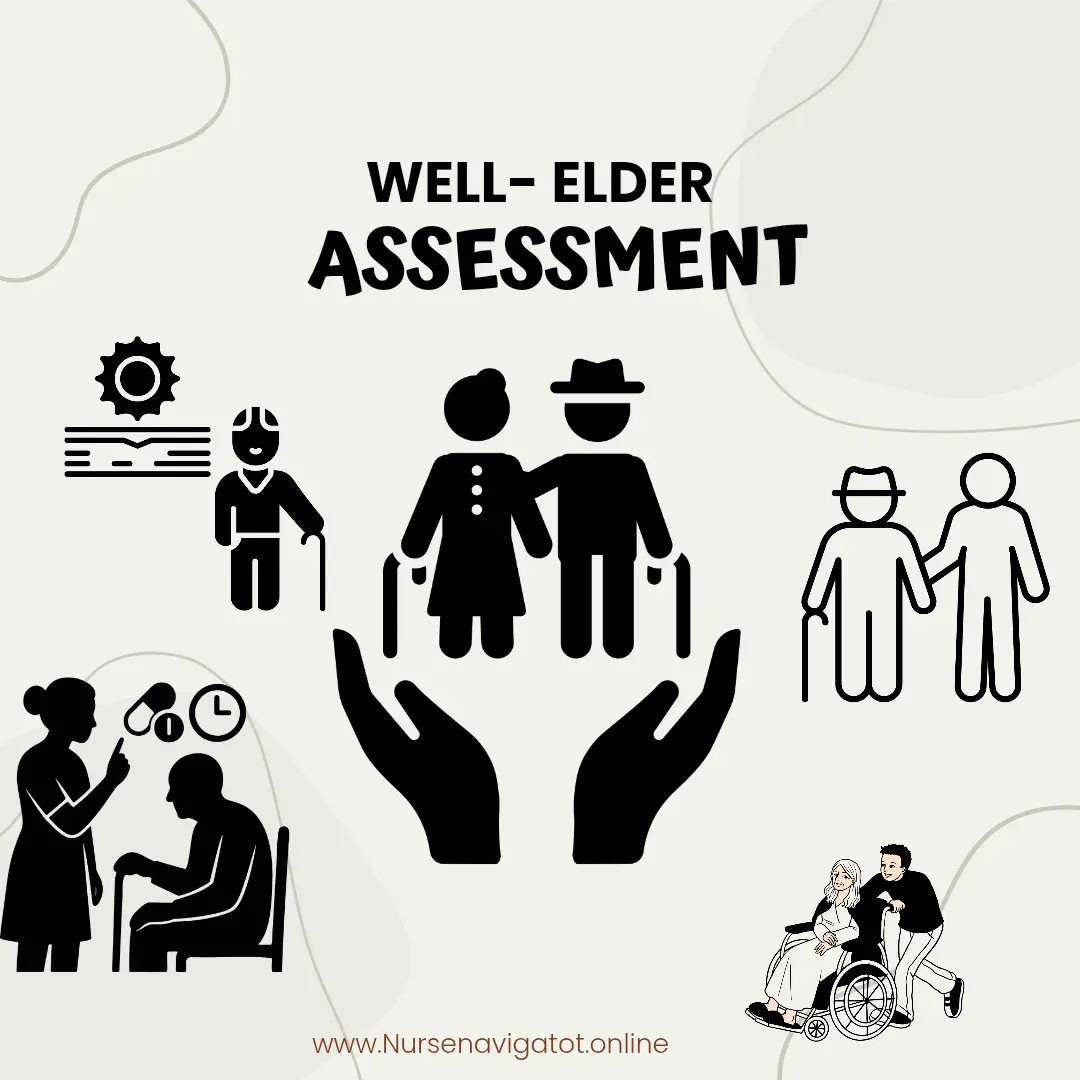
In today’s rapidly evolving healthcare landscape, nurses stand at the forefront of delivering high-quality, patient-centered care—especially to our growing elderly population. With challenges ranging from chronic conditions to cultural diversity, advanced practice registered nurses (APRNs) play an indispensable role in ensuring safe, effective, and compassionate care.
Drawing from evidence-based practices and nursing theories, developing a thorough assessment and care plan for well-elders not only enhances their quality of life but also equips nurses with the skills needed to manage more complex cases involving ill or critically ill elders.
The Importance of Holistic Assessment in Elder Care
Modern healthcare demands a multifaceted approach that goes beyond physical symptoms. Health encompasses mental well-being, emotional stability, psychosocial interactions, family relationships, and community engagement (Mackey & Bassendowski, 2017). When assessing a well-elder, nurses must build a trusting therapeutic relationship to uncover unique needs such as loneliness, anxiety, depression, or changes in eating habits.This comprehensive view reveals common vulnerabilities in aging populations, including cardiovascular issues, joint problems, and diabetes.
Effective geriatric care requires thoughtful planning, community-focused implementation, ongoing evaluation, and advocacy to promote health programs that address both individual and population-level needs.Nurses excel in this domain by gathering detailed histories, employing effective communication, and applying critical thinking to interpret data and explore treatment alternatives (Munif et al., 2019).
The Nursing Process: ADPIE in Action
The cornerstone of patient-centered care is the ADPIE framework—Assessment, Diagnosis, Planning, Implementation, and Evaluation—which ensures systematic, evidence-based interventions for elders.
Assessment
Accurate and timely documentation is essential for quality improvement and serves as legal proof of care provided. Nurses record vital signs, subjective and objective data, medical and family histories, while adhering to institutional policies. This phase lays the groundwork for identifying physiological and psychological needs unique to aging patients.
Diagnosis
Critical thinking is key here. Nurses break down cases into components, analyzing sociocultural and environmental factors. They apply personal, professional, and ethical standards to formulate diagnoses, often using differential diagnosis to narrow possibilities and guide further investigation.
Planning
Care plans should be SMART (Specific, Measurable, Achievable, Relevant, Time-bound) and collaborative, involving patients, clinicians, pharmacists, psychiatrists, and community services (Sullivan et al., 2017). Informed consent is crucial, empowering elders to participate actively in their care journey.
Implementation
Nurses translate plans into action, delivering evidence-based interventions that boost patient confidence through compassionate, high-morale care (Coventry et al., 2015). Leadership shines here as nurses coordinate regimens, critically appraise diagnoses, and adapt to individual needs.
Evaluation
This stage involves assessing outcomes against set goals and gathering feedback from all stakeholders. Nurses demonstrate role-making and role-taking skills, assigning tasks based on team members’ strengths (Söderhamn et al., 2015). Transforming past and present knowledge fosters open-mindedness and flexibility in practice.
Embracing Need-Based Nursing Theory for Elder Care
One powerful framework for enhancing elder care is the need-based nursing theory, which emphasizes nurses’ leadership in helping patients meet basic human needs and regain independence (Adib-Hajbaghery & Tahmouresi, 2018). Unlike physician-centered models, this approach highlights nurses’ pivotal role in daily care, especially when patients become more dependent.Key elements include
- Educating individuals and communities on healthy lifestyles
- Promoting health maintenance, restoration, and disease prevention
- Supporting survival during difficult times and providing care when self-care is impossible
- Addressing obstacles to patient-centered services, such as infection risks or psychological stress nurses, maximize care by performing procedures aseptically, meeting basic needs, and using ethical communication to reduce anxiety and improve treatment adherence.
- Cognitive skills—like breaking down cases, applying standards, and differentiating clinical presentations—further support evidence-based decisions.
Conclusion:
Advocating for Excellence in Geriatric NursingBy thoroughly assessing well-elders and applying the ADPIE process alongside need-based theories, nurses not only improve outcomes for healthy seniors but also build expertise for managing critically ill elders. This holistic, evidence-driven approach fosters healthier aging communities and underscores the irreplaceable role of nurses in modern healthcare.As we continue to advocate for updated standards backed by scientific data, let us remember that compassionate, skilled nursing is the heart of geriatric care.
References-
Adib-Hajbaghery, M., & Tahmouresi, M. (2018). Nurse–patient relationship based on the Imogene King’s theory of goal attainment.
Nursing and Midwifery Studies 7(3), 141. https://doi.org/10.4103/2322-1488.235636- Coventry, T. H., Maslin-Prothero, S. E., & Smith, G. (2015). Organizational impact of nurse supply and workload on nurses continuing professional development opportunities: An integrative review.
Journal of Advanced Nursing https://doi.org/10.1111/jan.12724- Mackey, A., & Bassendowski, S. (2017). The history of evidence-based practice in nursing education and practice. Journal of Professional Nursing, 33(1), 51–55.
https://doi.org/10.1016/j.profnurs.2016.05.009- Munif, B., Poeranto, S., & Utami, Y. W. (2019). The effect of mindfulness caring against the stress in nursing students in taking on thesis.
International Journal of Psychiatric Nursing, 5(2), 55. https://doi.org/10.5958/2395-180x.2019.00029.x- Söderhamn, U., Kjøstvedt, H. T., & Slettebø, Å. (2015). Evaluation of ethical reflections in community healthcare: A mixed-methods study.
Nursing Ethics https://doi.org/10.1177/0969733014524762- Sullivan, D. R., Mongoue-Tchokote, S., Mori, M., Goy, E., & Ganzini, L. (2017). Randomized, double-blind, placebo-controlled study of methylphenidate for the treatment of depression in SSRI-treated cancer patients receiving palliative care.
Psycho-Oncology, 26(11), 1763–1769. https://doi.org/10.1002/pon.4220


- Be Respectful
- Stay Relevant
- Stay Positive
- True Feedback
- Encourage Discussion
- Avoid Spamming
- No Fake News
- Don't Copy-Paste
- No Personal Attacks
- Be Respectful
- Stay Relevant
- Stay Positive
- True Feedback
- Encourage Discussion
- Avoid Spamming
- No Fake News
- Don't Copy-Paste
- No Personal Attacks
